
Tájékoztató a méhszájseb kacskonizációs vagy hurokkimetszéses műtétjéről (LLETZ műtét)
TB-támogatott műtét
A méhszájseb (cervicalis elváltozás) tartós fennállása esetén indokolt a kóros hámterület eltávolítása, mivel kezeletlenül súlyosabb elváltozásokhoz is vezethet. A korszerű LLETZ (kacs-konizáció) eljárás célzottan, nagy pontossággal távolítja el az érintett szövetet, miközben megkíméli az egészséges állományt, így biztonságos és hatékony megoldást jelent.
Klinikánkon a beavatkozás kellemes környezetben, egynapos sebészeti ellátás keretében, altatásban történik. A műtét rövid ideig tart, a páciens néhány órás megfigyelést követően hazatérhet, és már másnap jellemzően visszatérhet a megszokott mindennapokhoz. A teljes felépülés 2-3 hét.
Az Ars Medica Magánkórházban az azonnali időpontfoglalás, a szervezett betegút, a vizsgálatot végző orvossal biztosított közvetlen telefonos kapcsolattartás, valamint a magánklinikai színvonalú környezet és szakmai háttér támogatja a gyors és biztonságos gyógyulást.
A műtéteket Dr. Vermes Gábor, nagy szaktekintélyű nőgyógyász főorvos végzi. A méhszájseb (LLETZ) műtéteink TB-támogatással vehetők igénybe, így elérhető áron nyújtanak tartós megoldást, hosszú várólisták nélkül.

 A betegség
A betegség A különböző nőgyógyászati panaszok miatt, vagy a rendszeres rákszűrés kapcsán elvégzett nőgyógyászati alapvizsgálat során sokszor találkozunk a méhszáj különböző kóros elváltozásaival.
Ezeknek egy része (méhszájrepedés, méhszájseb, kóros hámelváltozások, stb.) krónikus gyulladást tarthat fent, amely hüvelyi folyást okoz, másik része - elsősorban a HPV fertőzés következtében kialakult, hosszú időn át meglévő méhszájsebek - a későbbiekben rosszindulatú daganat kifejlődésének alapjául szolgálhatnak.

A mindennapi gyakorlat a képen látható elváltozást illeti a méhszájseb névvel, melynek során a méhszájat normálisan a hüvely felől borító többrétegű laphám helyére a méhnyakra jellemző hengerhám kúszik a méh felől. Tekintettel arra, hogy ez a hámféleség sokkal vérbővebb, ezért úgy néz ki, mint egy horzsolt seb lenne a méhszájon. A méhszájseb gyakorlatilag minden esetben gyulladásból származik. A méhszájsebet minden esetben gyógyítani érdemes, mert hosszú távon a méhnyakrák "melegágya" lehet! Negatív citológia esetén lézeres méhszáj műtét végezhető, kóros, de még nem egyértelműen rosszindulatú sejteket kimutató citológia esetén kacs (hurokkimetszéses vagy loop) konizáció. Természetesen a szakorvos feladata eldönteni, hogy ilyenkor milyen típusú műtétet kell végezni. Fontos ugyanakkor kiemelni, hogy a HPV (Humán Papillóma Vírus) jelenléte a méhszájsebbel együtt fokozza a méhnyakrák kialakulásának veszélyét. Előrehaladott esetben, amikor a HPV sokéves tevékenysége eredményeként már a méhnyak hámjában is elváltozásokat okoz, a deformálódások hasonlítanak a méhszájsebre. Mivel ez már néha valóban méhnyakrák vagy az azt megelőző állapot, ezért mondja a köznyelv, hogy a méhszájseb elrákosodik, holott ebben az esetben két egymástól jól különböző és elkülöníthető folyamatról van szó, ami persze gyakran együtt, egyidejűleg jelentkezik, mert lehetséges fertőzés vagy szülési sérülés következtében a nyálkahártya megjelenése a méhszájon egyidejű a HPV fertőzéssel. A megoldás kulcsa természetesen a rendszeres méhnyakrák-szűrés során elvégzett HPV szűrővizsgálat (HPV tipizálás). Ha a szűrés során a citológiai vizsgálat nem jelez HPV fertőzésre utaló jelet, akkor a méhszájseb semmiféle veszélyt sem jelent, az általa okozott kényelmetlenséget ambuláns, hegesedést nem okozó kezeléssel meg lehet szüntetni (lézeres méhszáj műtét). A terhesség szempontjából a kikezelt korábbi méhszájsebnek nincs jelentősége, de ez fordítva úgy igaz, hogy minden ilyen elváltozást lehetőleg teherbe esés előtt meg kell gyógyíttatni. Méhszájsebe sok nőnek van, ezek rendszerint ártalmatlanok, ha mind a citológiai vizsgálat, mind a kolposzkópos vizsgálat kizárja a daganat jelenlétét. Ilyenkor elegendő a rendszeres ellenőrzés.
 Vizsgálat és konzultáció
Vizsgálat és konzultáció A műtétet minden esetben nőgyógyászati rákszűrés és alapvizsgálat előzi meg, mely belső (hüvelyi) vizsgálatot és rákszűrést foglal magában. A rákszűrés kolposzkópos vizsgálatból - a méhszáj "nagyító alatti vizsgálata" - és a vizsgálat során nyert hámsejtek mikroszkópos vizsgálatából áll. A vizsgálati eredmények birtokában döntünk arról, hogy a beteg méhszájelváltozása az egynapos sebészet keretében operálható-e. Ezután az orvos részletes tájékoztatást ad a betegnek állapotáról, a lehetséges kezelési módokról, és a tervezett műtétről. Ekkor esik szó az egynapos sebészetről mint speciális ellátási formáról, a műtéthez szükséges laboratóriumi, esetleg egyéb kiegészítő (MRTG, EKG, hasi UH, belgyógyászati) vizsgálatokról, a műtéti érzéstelenítés fajtáiról, a lehetséges szövődményekről, az otthoni ápolási teendőkről, a gyógyulás szakaszairól, a gyógyulás során felmerülő esetleges problémákról, mindazokról az információkról, amelyek szükségesek a beteg számára annak eldöntéséhez, hogy milyen kezelési módot, illetve műtétet válasszon.

A vizsgálat végén a teljes körű szóbeli felvilágosítás megtörténtét a beteg a tájékoztató jegyzőkönyvének (vizsgálati lap) aláírásával igazolja.
 A kezelés lehetőségei
A kezelés lehetőségei Ismételt citológiai eltérések, illetve HPV fertőzés esetén a méhszájseb egyetlen korrekt megoldása, az elváltozás épben történő eltávolítása, az ezt követő szövettani vizsgálattal. Ezt a műtétet klinikánkon, egy radiosebészeti vágóeszközzel végezzük mely, lehetővé teszi a gyors - vérzés és varrás nélküli - beavatkozást (15-20 perc), és a műtétet követő rövid megfigyelési időt (1-2 óra). A kacskonizáció (loop konizáció) esetén az átlagos gyógyulási idő 4-5 hét. Ez idő alatt a méhszájon ejtett sebzés begyógyul, behámosodik minimális heggel. A beavatkozás során nyert szövetminta eredményétől függően történik döntés a szükséges további terápiáról. Az esetek jelentős részében a beavatkozás egyben a végleges gyógyulást is jelenti, amit a szokásos időszakonként elvégzett rákszűrések kontrollálnak. Fontos megjegyezni, hogy a fenti beavatkozással a jövőben vállalni kívánt terhességek sikeres kiviselésének kockázatát is sikerül minimumra csökkenteni.
 A műtéti érzéstelenítés
A műtéti érzéstelenítés
 Műtét előtti teendők
Műtét előtti teendők A műtét napján egyeztetett időpontban megjelent beteg hozza magával a laborleleteit, papucsot, hálóinget (pizsamát). Mielőtt lefektetjük a kórteremben, egy megbízási szerződést kell aláírnia, melyben megbízza a klinikát a beavatkozás elvégzésével. Emellett vállalnia kell az otthoni sebkezelést és a megbeszéltek szerinti műtét utáni teendőket. Ha altatásban vagy helyi érzéstelenítéssel kombinált altatásban történik a műtét, az altatóorvos is megvizsgálja. Ekkor írja alá a "Tájékoztató a műtéti érzéstelenítésről" nyomtatvány altatási beleegyező nyilatkozat mellékletét.
Fontos!
Ha a műtétet altatásban vagy kombinált érzéstelenítésben végezzük, az operációt megelőző napon éjfélig szabad csak ételt és italt fogyasztani, mivel az altatást kizárólag teljesen éhgyomorral lehet elvégezni!
A rendszeresen szedett gyógyszereket a szokott időben és dózisban vegye be - a reggeli orvosságot kevés folyadékkal, otthonában indulás előtt. Amennyiben van olyan gyógyszere, amelyet napközben is szednie kell, azt hozza magával a klinikára!
Hozzon magával váltó fehérneműt (bugyit) és intimbetétet.
 A méhszájseb kacskonizációs műtét
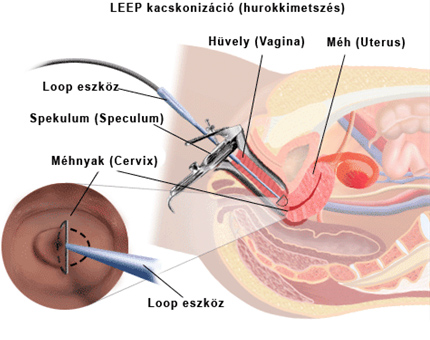
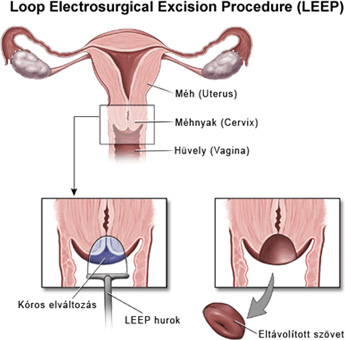
A méhszájseb kacskonizációs műtét A rádióhullámú sugárzás energiáját felhasználva, sejtvaporizációt (sejtelpárologtatást) hozunk létre a szükséges méretű és formájú wolframkacs vonalában, és ezzel kimetsszük a kóros elváltozást. Az eljárás jellegénél fogva a környező szövetekben csupán minimális hőkárosodást okoz, ezért egyrészt a sebgyógyulás gyorsabbá válik, másrészt a szövettani vizsgálatra kitűnően alkalmas, éles szélű, nem hőkárosodott, kónusz alakú minta nyerhető a méhszáj szöveti állományából. Ez a műtéti módszer, a sebszél felöli hámosodással, hegesedés nélküli gyógyulást eredményez. Vérzéscsillapítás után, amennyiben az előzetes vizsgálati leletek szükségessé teszik, a fenti beavatkozással egy időben további, szövettani vizsgálatra alkalmas anyagot veszünk a méhnyakból is.

Az alábbi képeken a műtét különböző lépéseit lehet megtekinteni.
Figyelem! A videó a nyugalom megzavarására alkalmas képsorokat is tartalmazhat!
 Műtét utáni teendők
Műtét utáni teendők A műtétet általában 1-2 órás megfigyelési idő követi, ha helyi érzéstelenítésben, 4-6 óra, ha altatásban végezzük, amely alatt az élettani funkciók stabilizálódnak (vérnyomás, vizelet), és a beteg saját lábán, kísérővel elhagyhatja a klinikát.

A műtét utáni napon a betegeink többsége folytathatja mindennapi aktivitását, táppénz igénybevétele nem szükséges. A méhszáj begyógyulásáig, hámosodásáig - mely általában 4 hétig tart - kevés hüvelyi folyás jelentkezhet. Bizonyos esetekben a műtétet követő 5-10. nap között, a közepes menstruációs vérzésnél kevesebb szivárgó vérzés észlelhető, amely szintén a sebgyógyulás részjelensége lehet, tehát nem kóros jelenség. Fájdalom vagy más panasz szövődménymentes esetben nem fordul elő. A műtétet követő 3-4. hét alatt ülőfürdő, tampon használata és a szexuális élet nem ajánlott. Panaszmentes esetben a műtéttől számított 6 hét elteltével ellenőrző vizsgálatra kérjük vissza betegeinket.
 Lehetséges szövődmények
Lehetséges szövődmények Egy műtéti beavatkozás szövődménymentességét egy orvos sem garantálhatja. A leggondosabb orvosi beavatkozás után is kialakulhatnak szövődmények. A lehetséges korai szövődmények: utóvérzés, gyulladás, azonban kezelhetők. Ezért bármilyen csekély jelét is tapasztalja a szövődmény kialakulásának (pl. vérzés, láz, alhasi fájdalom, bűzös folyás), éjjel-nappal utolérheti operáló orvosát, aki gondoskodik a szövődmény megoldásáról.
 Miért minket válasszon?
Miért minket válasszon? Orvosaink
